
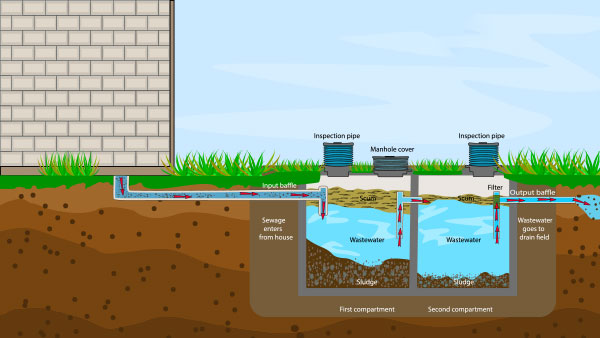
A well-maintained septic system can last for decades. It quietly does its job underground, processing waste, filtering wastewater, and keeping your home running smoothly without a second thought. But let’s be honest — some people just aren’t satisfied with things that work. Some people look at a perfectly functioning septic system and think, “How can I absolutely obliterate this thing?”
Well, you’re in luck. We’ve put together this handy guide on exactly how to destroy your septic system. Follow these steps carefully, and you’ll be looking at thousands of dollars in repairs in no time.
Disclaimer: The following tips are ONLY for those who want to destroy their septic system. If you’d like yours to keep working properly, do the exact opposite of everything listed below.
Flush Everything Down the Toilet
Your septic system was designed to handle exactly three things: human waste, water, and toilet paper. That’s it. The bacteria inside your tank break down these materials naturally, and everything flows along just fine. But where’s the fun in that?
If you really want to wreck your system, start treating your toilet like a garbage disposal. Here’s a handy list of items to flush if total destruction is your goal:
- Feminine hygiene products
- Condoms
- Diapers
- Paper towels
- Legos
- Fruit and vegetables
- Socks
- Credit card applications
Your new motto: “If it fits, flush it!” These items won’t break down in your tank. Instead, they’ll clog your pipes, overwhelm your system, and create blockages that make your plumber’s eyes light up with dollar signs. Mission accomplished.
Never Pump Your Septic Tank
Here’s a little secret the septic industry doesn’t want you to know: your septic tank has a limited capacity. Shocking, right? Solid waste accumulates at the bottom of the tank over time, and the tank needs to be pumped out every 3 to 5 years to keep things running properly.
But if you want to destroy your system, just skip that step entirely. Pretend the tank is a bottomless pit. Ignore it completely. Eventually, the solids will build up so high that they’ll start flowing out into your drain field, clogging the soil and destroying the entire leach system. The grand finale? Raw sewage backing up into your home through your drains. Nothing says “I should have called SewerTime” quite like sewage bubbling up in your bathtub.
Bonus points if you also ignore the warning signs along the way — slow drains, gurgling pipes, soggy spots in the yard, and that lovely sulfur smell wafting through your bathroom. Just pretend everything is fine. It’ll sort itself out, right?
Plant Trees Directly On Top of Your Drain Field
Your drain field is the unsung hero of your septic system. It’s where wastewater gets released into the soil for natural filtration and absorption. The soil, gravel, and carefully engineered piping work together to safely process the effluent from your tank. It’s actually pretty impressive engineering — which is exactly why you should plant a row of beautiful, thirsty trees right on top of it.
Tree roots are nature’s demolition crew. They’ll slowly but surely find their way into every crack, joint, and perforation in your drain field piping. Once inside, they’ll expand, block the flow of wastewater, and eventually break the pipes apart entirely. It’s a long-term destruction plan — we’re talking years — but the payoff is enormous. By the time those roots are done, your entire drain field will be pulverized, and you’ll be looking at a full system replacement that could cost you tens of thousands of dollars.
We recommend willows, maples, or any other tree with an aggressive root system. Plant them as close to the drain field as possible for maximum damage.
Divert Water Directly into Your Drain Field
Your drain field can only process so much water at a time. The soil needs time to absorb and filter the wastewater before more comes along. If the field gets oversaturated, the soil can’t do its job, and you end up with water pooling on the surface, sewage smells, and a system that’s completely backed up.
So naturally, if destruction is your goal, you’ll want to route as much extra water as possible directly into your drain field. Redirect your gutter downspouts so they dump rainwater right onto the field. Point your sump pump discharge at it. Better yet, install some little barricades around the perimeter of your drain field to channel every drop of rainfall directly into the soil above those pipes.
The more water you can force into that area, the faster the soil will become waterlogged and unable to process anything. Your drain field will fail, your system will back up, and you’ll have a swampy, foul-smelling mess in your yard. Perfect.
In all seriousness, the strategies above are ONLY for those who genuinely want to destroy their septic system. Everyone else should avoid these mistakes at all costs. Your septic system is a significant investment, and proper maintenance is the key to making it last. Schedule a septic inspection to make sure your system is in good shape. Take care of it, get it pumped on schedule, keep trees away from the drain field, and be mindful of what you flush and where your water drains.
Want to PROTECT your septic system? Call SewerTime Septic & Drain at (602) 777-7867 for professional maintenance and pumping.