
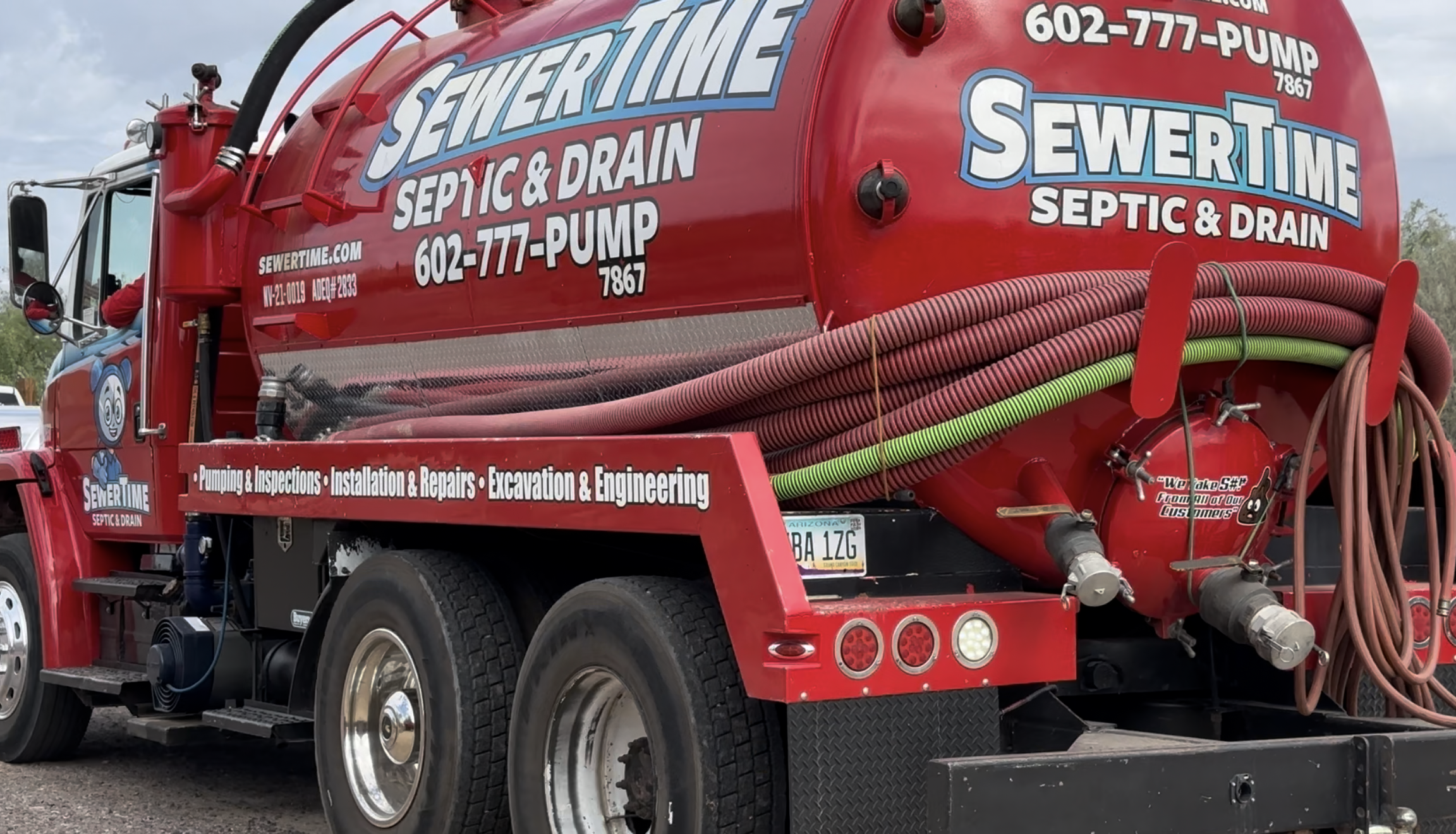
You notice the drains are sluggish. Maybe the toilets are gurgling. Or there's an odor outside that wasn't there before. If your home runs on a septic system, these are signs you already know what question to ask: who pumps septic tanks near me, and when should I call them?
At Sewer Time, we've been pumping and servicing septic systems across the Phoenix metropolitan area for nearly a decade — from Scottsdale and Mesa to Cave Creek, Desert Hills, Glendale, and beyond. In that time, we've seen just about every type of tank, every kind of access challenge, and every mistake a homeowner can make by waiting too long — or by hiring the wrong company.
This guide is designed to answer every question you might have about septic tank pumping: what it involves, how often you need it, what it costs, and how to choose the right local septic professional. We'll also share some insider knowledge that can save you from a very expensive mistake.
What Does Septic Tank Pumping Actually Involve?
When you schedule a septic pump-out with Sewer Time, here's exactly what happens from the moment our truck pulls up to your property.
First, we gain access to your tank. This is where things can differ depending on your property. Some homes have risers — those round lids you may have seen in the yard, typically 24 inches or larger — that bring the tank access point up to ground level. If you have risers, we simply remove them and we're ready to go. If you don't have risers, we'll need to dig down to locate the tank's lids, which adds time and cost to the service.
One important thing to clarify upfront: not every opening on your property is a proper access point for pumping. There are three things homeowners commonly confuse:
- Inspection ports — Small, usually 6-inch openings that connect into the septic plumbing. These are NOT proper pump-out access points.
- Sewer clean-outs — Access points on your sewer line, not the tank itself. A tank cannot be properly pumped through these.
- Tank man-ways or lids — The full-size access points at the top of the tank. This is the only correct way to pump a septic tank properly.
Once we have proper access, we assess the water and sludge levels inside the tank to check for signs of a backup or abnormally high water levels reaching into the inlet baffle. If your tank is equipped with an effluent filter — a component found on newer tanks that prevents solids from escaping into your drainfield — we'll clean that filter as part of the service.
We'll mix the sludge in the tank to ensure a thorough, complete pump-out, then perform a quick visual inspection of the tank interior to check for cracks, structural issues, or anything else that warrants attention. Once everything checks out, we close everything up — and you're typically good for another 3 to 5 years.
How Do You Know When Your Septic Tank Needs to Be Pumped?
The honest answer is: don't wait until you notice a problem. By the time your septic system is showing obvious symptoms, the situation has often already progressed further than it should have. That said, here are the warning signs every homeowner should know:
- Gurgling toilets or slow-draining tubs and sinks — These are often the first plumbing signals that your tank is starting to back up and water has nowhere to go.
- Sewage odors indoors or outdoors — A smell near the tank area or inside the home can indicate the system is under pressure.
- Wet spots or unusually green patches in your yard — Moisture near your drainfield can signal effluent surfacing above ground.
- Sewage backup in drains or toilets — This is an emergency. Call immediately.
Pro tip from our team: if you know where your septic tank is located, you can periodically open your sewer clean-out (the access on your sewer line) to check for moisture or water. Catching a slowly filling system early can be the difference between a routine pump-out and an emergency call.
How Often Should a Septic Tank Be Pumped?
The general rule of thumb is every 3 to 5 years, but there's an important misconception we encounter constantly that we want to address head-on.
Many homeowners believe they don't need to pump their tank if it doesn't appear "full," or that pumping too frequently is somehow bad for the system. This is simply not true.
Here's what actually happens: your septic tank processes water in stages, moving liquid from one chamber to the other and eventually out to your drainfield. When the sludge and scum layers build to a certain level — even before the tank is technically "full" — that process becomes compromised. Solids begin pushing out toward the drainfield, clogging the soil and drastically shortening the life of your entire septic system. A drainfield replacement can cost tens of thousands of dollars. A regular pump-out costs a fraction of that.
Factors that affect how often you should pump your tank include:
- Tank size — Smaller tanks fill faster and require more frequent service.
- Number of people in the household — More residents means more daily water usage flowing into the system.
- Usage habits — Garbage disposals, excessive water use, and non-biodegradable items flushed down toilets all shorten the time between needed pump-outs.
What to Look for When Choosing a Septic Tank Pumping Company
Not all septic companies operate the same way, and choosing the wrong one can actually cause more harm than good. Here's what to look for — and watch out for.
Red Flag: Companies That Pump Through Inspection Ports
This is one of the biggest red flags in our industry. Some companies will pump a septic tank through the small 6-inch inspection ports rather than through the proper full-size access lids. This is faster for them — but it results in an incomplete pump-out, leaving behind sludge and solids that should have been removed.
A reputable company will always insist on pumping through the proper man-ways or lids. If a company doesn't even mention this distinction, or doesn't inform you of the difference, that's a sign to look elsewhere.
What to Look For in a Quality Septic Company
- Proper licensing and insurance — Working on a septic system requires authorization. Always verify.
- Transparent pricing — You should be able to get a clear estimate before anyone shows up. Sewer Time offers an online pricing estimator for both septic pumping and ADEQ inspections on our website, so there are no surprises.
- Subject matter expertise — A good septic professional doesn't just pump and leave. They explain what they found, answer your questions, and help you understand how to take care of your system going forward.
- Experience with your type of system — In areas like Cave Creek and Desert Hills, homes range from decades old to brand new. Your service provider should be comfortable with everything from old split-lid tanks and cesspool-style systems to modern tanks with effluent filters.
How Much Does Septic Tank Pumping Cost in Phoenix?
The biggest factor affecting the cost of a septic pump-out is the size of your tank. Larger tanks require more time and capacity to pump, and therefore cost more. Beyond tank size, here are the other things that can affect your total cost:
- Access difficulty — If your tank has surface-level risers, access is quick and simple. If it doesn't, we may need to excavate down to the lids, which takes additional time and equipment.
- Tank location — If you're unsure where your tank is, we can electronically locate it, which adds to the service cost.
- Effluent filter cleaning — If your system has an effluent filter, cleaning it is an important part of the service.
To make pricing easy and transparent, Sewer Time has a pricing estimator tool on our website for both septic tank pumping and ADEQ inspections. You can get a general idea of cost before ever picking up the phone — no pressure, no guessing.
Do You Handle Septic Emergencies?
Yes — Sewer Time handles emergency septic calls. But more importantly, we want to help you avoid ever needing one.
Emergency septic situations are stressful and expensive. The good news is they rarely happen without warning. If you pay attention to your plumbing — gurgling toilets, drains that are slower than usual, any unusual odors — you typically have a window to act before things escalate into a true backup.
Know where your septic tank is located, and if you have a sewer clean-out, check it periodically. If you see water or moisture inside, don't wait. Call before the problem forces your hand.
Serving Cave Creek, Desert Hills, and the Greater Phoenix Area — Local Knowledge Matters
One of the advantages of working with a truly local septic company is that we understand the specific conditions and history of properties in our service area. Cave Creek and Desert Hills are a perfect example.
These communities are uniquely diverse in terms of housing age. On the same road, you might find a decades-old property with an older split-lid tank or a cesspool-era system sitting next to a newly built home with a modern system complete with an effluent filter and up-to-date ADEQ compliance requirements.
Sewer Time has extensive experience with all of it. We're not guessing when we show up to an older property — we know what to look for. And we're fully up to date on current Arizona codes and inspection standards for newer installations. That breadth of experience, built over nearly a decade of working throughout the north Phoenix area, means we're genuinely prepared for whatever we find.
About Sewer Time — A Local, Family-Run Septic Company Serving Phoenix
Sewer Time is a local, family-run business with deep roots in Cave Creek and the north Phoenix area. We've been serving the Phoenix metropolitan area for nearly a decade, providing septic tank pumping, ADEQ inspections, full system design and permitting, alternative septic designs, and excavation and installation services.
What we take the most pride in isn't the size of our truck or the equipment we carry — it's the fact that when we leave your property, you understand your septic system better than when we arrived. We believe informed homeowners make better decisions, and better decisions lead to longer-lasting systems. That's good for you, and it's the kind of work we're proud to put our name on.
We serve Phoenix, Cave Creek, Desert Hills, Scottsdale, Mesa, Glendale, and the surrounding communities.
Our Services Include:
- Residential septic tank pumping
- ADEQ septic inspections
- Full septic system design and permitting
- Alternative septic system design and permitting
- Septic system installation and excavation
Ready to Schedule Your Septic Tank Pump-Out?
Whether you're due for routine maintenance, shopping for a home with a septic system, or dealing with an issue that can't wait — Sewer Time is ready to help. We serve the entire Phoenix metro area and bring nearly a decade of hands-on experience to every job.
Check out our transparent pricing estimator online, or give us a call to schedule your service. We'll show up on time, explain exactly what we find, and make sure your system is set up to last.
Ready to schedule? Call SewerTime Septic & Drain at (602) 777-7867 or request a free estimate online.