
Seepage Pit Drilling for Arizona Septic Systems
ADEQ-Permitted Vertical Shaft Drilling for Properties Where Leach Fields Won't Work
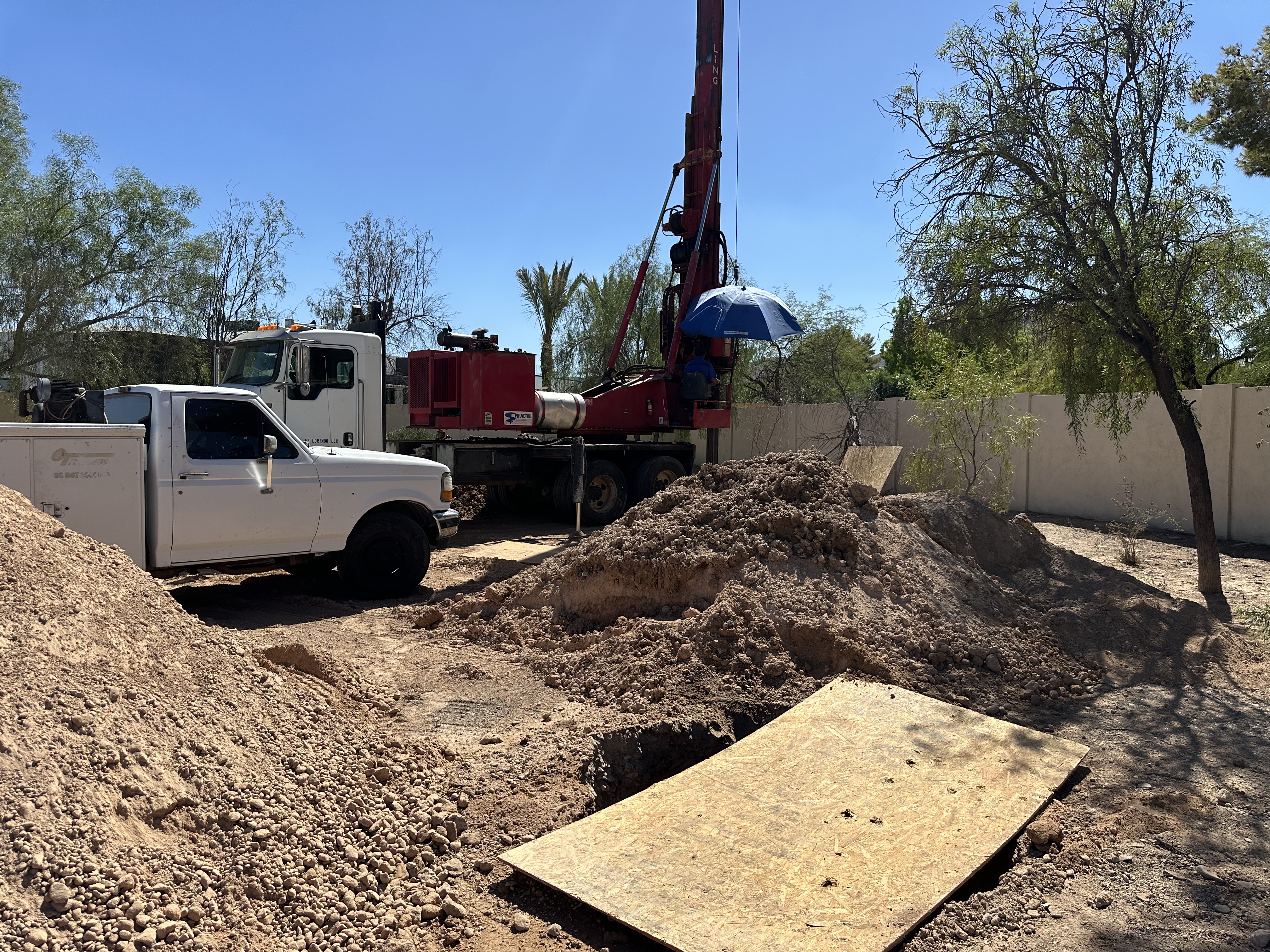
When Leach Fields Aren't an Option
A seepage pit is a large-diameter vertical shaft that disperses septic effluent deep underground, below restrictive surface soils. In Arizona, when a percolation test fails due to hard caliche or clay, horizontal leach fields are not permitted — and a seepage pit becomes the ADEQ-approved alternative. SewerTime drills, lines, and installs seepage pits across Maricopa County for residential and small commercial septic systems.
Seepage Pit Installation
When a percolation test fails on a property, horizontal leach fields are not permitted. Vertical seepage pits provide an ADEQ-approved alternative that disperses effluent at depth, below restrictive surface soils, where percolation rates are sufficient.
We drill large-diameter vertical shafts, typically 4 to 6 feet across and 30 to 40 feet deep. Once drilled, the pit is lined with precast perforated concrete rings, and the exterior annulus is packed with sorted drain rock to support long-term percolation.
The 3-Year Pumping Rule
Seepage pits are very difficult and expensive to fix once they clog. Sticking to a 3-year septic tank pumping schedule is critical. If the tank isn't pumped regularly, solids carry over into the pit and seal off the surrounding rock — permanently reducing its ability to drain.
Structural Integrity & Regulations
- ADEQ Compliance: All shafts are registered and legally permitted through respective county environmental agencies.
- Concrete Casings: We use precast concrete chamber rings rated to handle the soil pressure at depth.
- Groundwater Separation: Pit depth is calculated to maintain the required legal separation from the water table.
Deep Septic Seepage Pit Drilling
When a standard soil percolation test fails due to high clay content or solid rock, a traditional shallow leach field will not function. In these scenarios, deep septic seepage pits are legally mandated.
We drill vertical shafts typically measuring 4 to 6 feet in diameter and reaching depths of 50 feet or more. Once drilled, the pit is filled with perforated sewer pipe and surrounded by washed aggregate rock to allow wastewater to percolate safely into the deeper soil.
- Large-Diameter Vertical Shafts — 4 to 6 feet in diameter, drilled to depths exceeding 50 feet to reach suitable percolation soils
- Perforated Pipe & Graded Aggregate — Filled with perforated sewer pipe and surrounded by washed aggregate rock for optimal percolation
- 12-Foot Separation Compliance — When multiple seepage pits are required, we ensure the strictly required 12-foot separation between pits
- Surface Space Preservation — Seepage pits preserve your valuable surface space, allowing you to build pools, driveways, or landscaping directly above the system
Keeping Your Seepage Pit Working for Decades
A properly maintained seepage pit can last 20 to 30 years or more. The most important thing you can do is stay on a regular septic tank pumping schedule. When solids escape the tank and enter the pit, they clog the surrounding rock and the system fails.
What We Recommend:
- Pump your septic tank every 3 years — this is the single most effective way to protect the pit
- Install an effluent filter — prevents solids from reaching the seepage pit even between pumpings
- Watch for slow drains or wet spots — early signs that the pit may be losing percolation capacity
- Schedule a pit inspection — we can camera the pit and check effluent levels to assess condition