
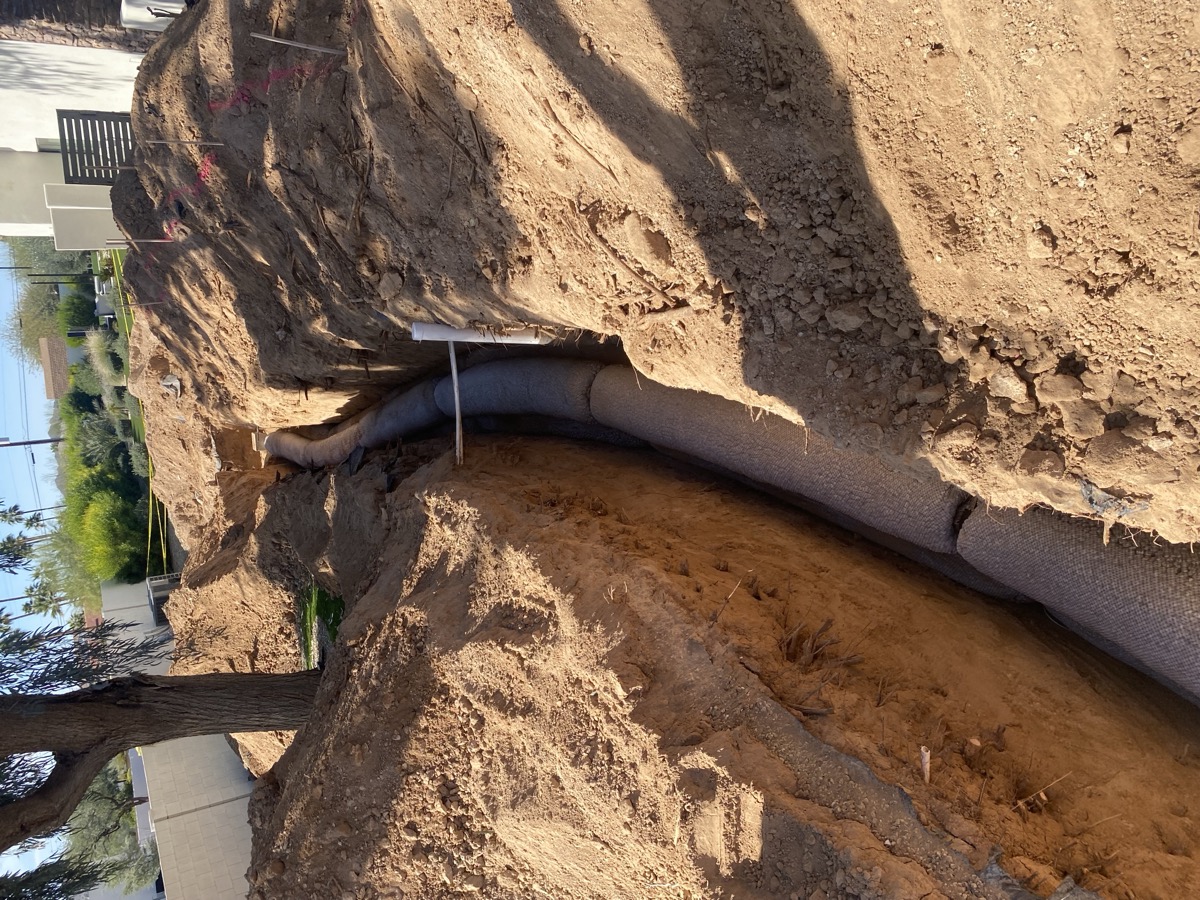
Two houses on the same road can have completely different septic systems buried out front, and neither one is wrong. The design gets picked by things the homeowner mostly doesn't control: how many bedrooms the house has, what the soil does when you flood it, how much lot there is to work with, how steep it sits, how close the nearest well or wash runs, and what ADEQ and the county will sign off on. One design even depends on the weather.
The EPA's rundown of common residential systems is ten designs long, and Arizona uses just about all of them somewhere. Here's each one in plain English, plus where it tends to show up around Phoenix. (There are more designs than these. These are the ten you'll actually meet.)
One piece of shorthand before the list: regulators sort all of this into conventional systems, a tank feeding a simple buried drainfield, and alternative systems, everything that leans on pumps, air, sand, or engineering to make a difficult lot behave. The first three below are conventional. The rest are alternatives.
The Septic Tank Itself
Every design on this list starts the same way: with a buried, watertight tank, almost always concrete around here, usually 1,000 to 1,500 gallons for a house. Wastewater flows in from the home and slows way down. The heavy solids sink and build a sludge layer on the bottom. Grease and the light stuff float up and form scum. The middle zone of mostly-clear liquid, what the trade calls effluent, is the only thing that leaves; the solids stay put, which is the whole point.
A tank by itself is only half a treatment system. It catches solids and starts breaking them down, but the liquid heading out still carries plenty that the soil has to deal with, and no tank escapes filling up with sludge eventually. That part's a schedule question, and we covered it separately in how often a septic tank needs to be cleaned.
The Conventional Gravel Trench System
The classic, and still the Valley default. A conventional system is the tank above feeding a drainfield: shallow trenches cut into native soil, filled with washed rock, with perforated pipe running through the rock. Effluent trickles out of the pipe, spreads through the stone, and soaks into the dirt below, where soil microbes finish the treatment. A sheet of geotextile fabric goes over the rock so backfill can't sift down and plug everything up. It's the standard setup for a single home or a small commercial building.
This design has been going into American yards mostly unchanged for decades because there's nothing on it to break. No pump, no panel, no alarm. Gravity hauls the water. What it asks for in exchange is room and cooperative soil: trenches take up serious yard, and the ground has to pass a perc test before anyone digs. Down on the Valley floor that's usually a yes. Up in the foothills, caliche or granite can show up two feet down and turn the answer into "not here."
If your septic home was built before the mid-90s and sits on a normal lot, odds are good this is what you own.
Chamber Systems
Take the same trench, skip the rock, and set a row of connected open-bottom plastic domes in it instead. That's a chamber system, the "gravelless" drainfield that's been in the ground for thirty-some years now and long since stopped counting as exotic. Effluent pipes in from the tank, pools inside the chambers in direct contact with the soil, and the microbes take it from there. Dirt gets backfilled around and over the domes. The gravelless family also includes fabric-wrapped pipe and bundles of foam media, and a lot of the chamber product on the market is molded from recycled plastic, which is most of why it can claim a lighter footprint than tons of quarried rock.
Contractors reach for chambers because the whole drainfield arrives on a trailer instead of in a dozen dump loads of rock, and installs go fast. They also shrug off swings in flow, which matters here more than most places: half of Rio Verde empties out every May when the snowbirds head north, and a drainfield that works hard all winter and sits idle all summer is exactly the variable-load case chambers handle well. In gravel-scarce regions they're the obvious pick; here it's mostly about speed. They suit high water tables too, for the few Arizona lots that have them.
Everything from here down is what ADEQ calls an alternative system: designs for lots where a plain gravity drainfield can't do the job.
Drip Distribution
Drip dispersal pushes effluent through flexible tubing buried in the top 6 to 12 inches of soil, the layer with the most biological activity in it. Because the lines ride that shallow, there's no need to build up a mound of imported fill; the system follows the grade you already have. That makes drip worth a look on odd-shaped lots, thin soils, and yards nobody wants torn open.
The catch is the machinery. Drip needs its own dose tank after the septic tank, plus a pump, filtration, and a controller metering out timed cycles, which means electrical service and a real maintenance habit. More parts, more cost, more that can page you at 2 a.m. It's a good tool where it fits. It's also more babysitting than most homeowners are picturing when they sign the contract.
Aerobic Treatment Units
An aerobic treatment unit runs the same play a municipal sewer plant does, shrunk to backyard scale: it pumps air into the wastewater. The extra oxygen wakes up a hungrier class of bacteria, and they clean the water to a grade a plain tank can't touch, stripping nutrients along the way. Some units bolt on a pretreatment compartment up front and a finishing chamber with disinfection at the back to knock pathogen counts down even further.
That treatment grade is the ticket onto lots a standard system can't serve: small parcels, bad soil, shallow groundwater, homes close to water that regulators protect. In Arizona these run under ADEQ's Type 4 general permits, the alternative-system paperwork, and they come with a standing obligation: an ATU is a machine that runs for the life of the house, and like your AC unit it expects a service contract and regular checkups, not wishful thinking.
Mound Systems
When the lot doesn't have enough soil, you import it. A mound system is a berm of engineered sand fill built on top of native grade with a drainfield trench inside. Effluent runs from the tank to a pump chamber, and the pump doses the mound on a schedule; treatment happens on the trip down, first through the sand, then into whatever native soil sits underneath.
Mounds exist for ground that flunks the depth check: bedrock close to the surface, seasonal high water, soil that quits two feet down. That's a lot of the terrain around Cave Creek and New River, where decomposed granite starts shallow, and it's why you'll spot these berms in yards up there. Fair warning on two fronts: a mound needs real acreage, and it's visible. It reads as a landform, not a lawn feature. The dosing pump needs periodic attention like any pump.
Recirculating Sand Filters
A sand filter is a contained bed of sand, lined with PVC or poured as a concrete box, working as a treatment stage between the tank and the drainfield. It can sit above grade or below. Effluent collects in a pump chamber, gets distributed at low pressure through a pipe grid across the top, and percolates down through the sand, which scrubs it before it moves on. In a recirculating setup, part of every pass loops back through the filter again instead of leaving after one trip.
Effluent leaves a sand filter about as clean as onsite treatment gets short of an ATU, nutrients included, which is why these get specified near wells, washes, and high groundwater. The catch is the invoice: between the liner, the extra tankage, the pump, and the sand itself, you're well past conventional money before the first flush.
Evapotranspiration Beds
Every other drainfield on this page gets rid of water by soaking it downward. An evapotranspiration bed refuses on principle: its base is lined watertight, so effluent never touches the soil below and never reaches groundwater. The water goes the only direction left, up, evaporating off the bed surface and transpiring through the plants rooted in it.
For that to work, the sky has to do the disposal, which takes dry air, heat, and sun most of the year. Phoenix, at three hundred sunny days give or take, is about the best case in the country for it, and an ET bed doesn't care that your lot is two feet of dirt over rock, since nothing is soaking in anyway. Its one real enemy is rain. A bed sized for June still has to survive a wet monsoon August, and too much water landing too fast is exactly how these fail. The sizing math is the whole ballgame.
Constructed Wetlands
A constructed wetland routes tank effluent through a lined cell packed with gravel and sand and planted with species that tolerate wet feet year-round, cattails and bulrushes being the usual crew. As water creeps through the media, microbes on the gravel and the plant roots pull out pathogens and nutrients, the same scrubbing a natural marsh performs. Flow can move by gravity or under pressure, and the outflow often finishes in a small drainfield.
It's a wastewater garden, honestly, and a functional one. Out here they're rare: the occasional eco-minded custom build, or a small rural property with an owner committed to the idea. Expect the county to want real engineering behind it either way.
Cluster and Community Systems
Not every septic system serves one house. A cluster system, also called a community system, collects wastewater from a group of homes, anywhere from two neighbors to a whole subdivision, and pipes it to one shared treatment setup and drainfield on common ground. Some newer rural subdivisions out toward Queen Creek and the Valley's edges were built exactly this way; one shared system penciled out better than extending sewer mains.
The engineering is ordinary. The ownership is the part to read closely: somebody, usually an HOA or a small private utility, owns, operates, and bills for that shared system, and it's worth knowing exactly who before close of escrow.
All Ten at a Glance
The whole list, condensed:
| System | The Short Version | Upkeep |
|---|---|---|
| Septic tank | The start of every system: solids settle, liquid moves on | Pump it on schedule |
| Conventional trench | Gravity drainfield of rock and pipe in native soil | Low |
| Chamber | Same idea, plastic domes instead of rock | Low |
| Drip distribution | Timed shallow drip lines under the surface | Medium to high |
| Aerobic unit (ATU) | Air-fed treatment to a higher grade | High, service contract |
| Mound | Engineered sand berm above thin ground | Medium, has a pump |
| Recirculating sand filter | Lined sand bed that scrubs effluent | Medium to high |
| Evapotranspiration bed | Lined bed that evaporates instead of soaks | Medium, sizing-critical |
| Constructed wetland | Planted lined cell doing marsh duty | Medium |
| Cluster system | One shared system for many homes | Depends who runs it |
Questions Homeowners Ask Us
How do I find out which system my house has?
Start with paper. Your county environmental services office keeps the permit and as-built drawing on file for most systems, and Arizona requires a transfer-of-ownership septic inspection when a septic property sells, so recent buyers usually have a report already. No records? The lid layout and a look inside the tank usually settle it in one visit.
What's the most common septic system in Arizona?
Conventional, by a mile: one tank, one gravity drainfield. On newer installs the drainfield is usually chambers rather than rock, but the design is the same one it's been for fifty years.
What does "ADEQ Type 4" actually mean?
It's Arizona's shorthand for the pre-approved alternative technologies. A standard tank-and-drainfield runs under the basic general permit; engineered designs like ATUs, sand filters, and drip systems run under the Type 4 series, with more paperwork and more ongoing obligations attached.
Can I pick which type gets installed?
Within limits. The perc test and site evaluation decide what's on the menu, and you and your budget order off it. On a flat lot with deep soil that percs well, nearly everything qualifies and conventional usually wins on price. On two feet of dirt over granite, the ground already made most of the decision for you.
Do alternative systems really take more maintenance?
Yes, and it's not fine print. Pumps, floats, aerators, filters, and control panels are all wear parts, and ATUs carry a standing service contract. A conventional gravity system asks for almost nothing beyond routine pumping. Match the system to your appetite for upkeep, not just to the lot.
Every one of these designs gets chosen the same way: a perc test and a site evaluation first, then the shortlist, then the install. If you're sizing up a lot, replacing a tired drainfield, or just curious what's buried out back, that first step is cheap and tells you almost everything.
SewerTime designs, permits, and installs septic systems across the Phoenix metro. Call (602) 777-7867 and we'll start with what your dirt can do.