Alarm going off? Pump running nonstop? We diagnose floats, pumps, and panels across the Phoenix metro, and our trucks can pump the tank down and swap the pump in one visit.
Start Here
That red light and horn is a high-water alarm. A float in your pump tank sits above the level where the pump should have kicked in, and it only trips when the water rises higher than it ever should. The message is simple: the pump did not do its job, and the tank's reserve zone is filling. It does not mean sewage is about to hit the floor.
Three moves, in order. First, press the silence button; it stops the horn, not the condition. Second, check the pump's breaker, and reset it once if it tripped. Alarms often sound right after power outages while the pump catches up, so one reset is a fair test. Third, cut water to essentials: no laundry, no dishwasher, short showers, necessary flushes only. The reserve zone typically buys a day or two of light use.
If the light clears and stays off, you dodged one; mention it at your next pump-out. If it will not clear after a few hours of minimal use, stop waiting and call (602) 777-PUMP. Ignoring it has a known ending: the tank overfills, sewage finds the lowest drain in the house or the ground above the tank, and a flooded disposal field can turn a four-figure pump job into the most expensive repair in the septic world.
Know Your Pump
An effluent pump moves clarified liquid, no solids, from a septic pump tank out to the drainfield or mound. It is the most common pump on a Phoenix-area septic system, and most homeowners just call it the septic pump. A sewage ejector pump handles raw sewage with solids up to two inches, lifting flow from below-grade fixtures up to the septic tank or the sewer lateral. A grinder pump shreds waste into slurry and pushes it at high pressure through small-diameter lines, built for long or uphill runs to pressurized mains.
The distinctions matter because the wrong pump fails early, and one substitution is flat-out harmful: a grinder pump should never discharge into a septic tank, because ground slurry does not settle properly and carries straight through toward the drainfield. A sump pump, for the record, moves groundwater only and has no business touching sewage.
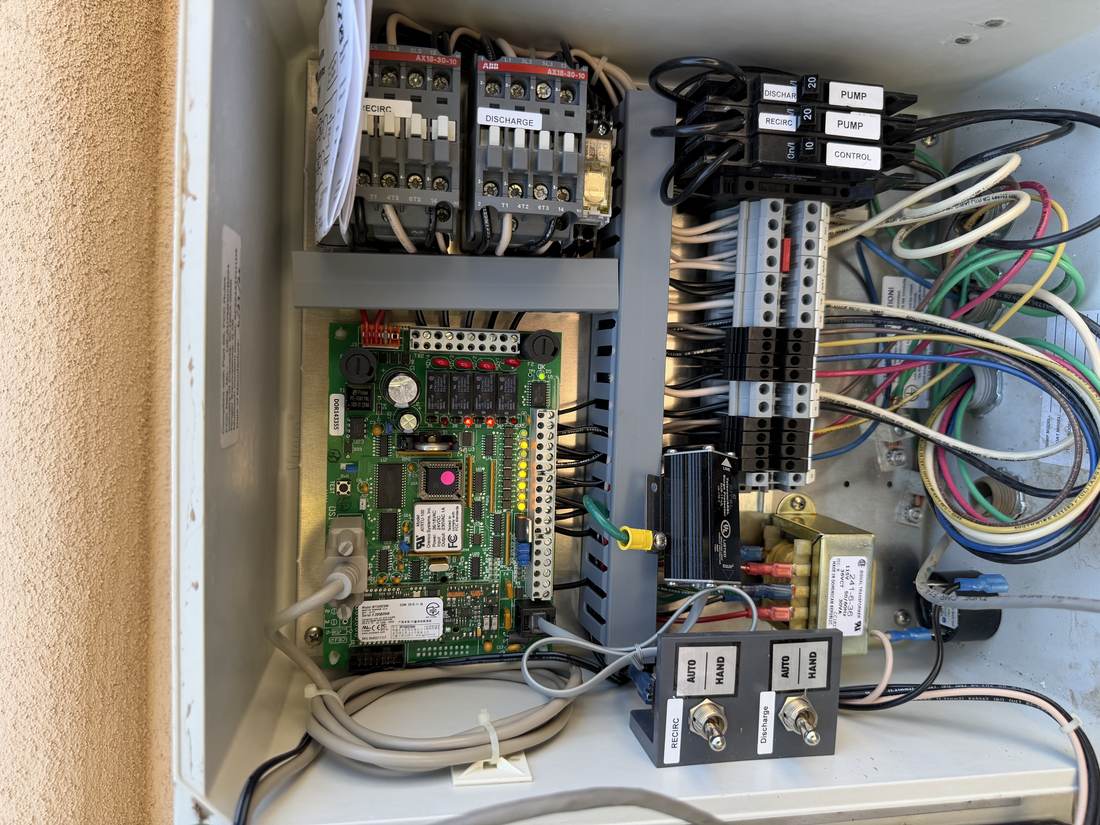
Not sure the system even has a pump? Look for a second buried lid past the septic tank, a gray control panel with a breaker and an alarm light, or pull the county's online septic records. Gravity systems have no pump at all, and plenty of Phoenix-area homes are gravity end to end.
What We Do
A large share of "dead pump" calls end with a float switch or check valve, not a pump. We test before we replace.
Phoenix plumbers write about ejector pits in basements. The typical Valley pump lives in a buried tank in the yard, on a septic system, where the stakes are the drainfield. We bring the vac truck to pump the tank down before the swap, we set floats for the tank's actual geometry, we protect the field, and we know when Maricopa County calls a repair an alteration. One crew, one visit, no second contractor.
Serving: the entire Phoenix metro from three depots — (602) 777-PUMP · ROC# 333406
What It Costs
National cost guides put ejector and septic pump replacement between roughly $850 and $3,500 with most jobs near the middle, and float switch replacement in the $150 to $900 range, typically $350 to $500. Those figures track what we see in the field. Your actual quote depends on pump type, lift height, tank access, and whether the tank needs pumping down first.
Our own published ranges for lift station work: preventative service visits $300–$600, pump replacement $1,500–$5,000, emergency repair $500–$5,000. Residential effluent and ejector jobs usually land below the commercial numbers. One pattern from national data worth knowing: emergency replacements run about 40 percent more than planned ones, which is the financial argument for fixing a limping pump on your schedule instead of its schedule.
Every price we publish is on the pricing page and the cost guide. No surprise line items.
Nearby & Related
Pumped Septic Systems · Septic System Repair · Commercial Lift Stations · All Service Areas
Pump Repair FAQs
In rough order of likelihood: the pump failed, a float switch is stuck or tangled, the breaker or GFCI tripped, the discharge line or check valve is clogged, the control panel has a wiring fault, or a burst of heavy water use briefly outran a healthy pump. Alarms also commonly sound right after a power outage while the pump catches up. The alarm means the reserve zone is filling, not that a backup has started.
Sparingly, yes. The tank holds reserve capacity above the alarm float, typically enough for a day or two of very light use. Silence the horn, skip laundry and the dishwasher, keep showers short, and flush only when necessary. If the light has not cleared after a few hours of that, call rather than wait it out.
Typical effluent and sewage pumps run 7 to 10 years, well-maintained units longer, and grinder pumps commonly 8 to 15. Floats usually die before motors. What shortens pump life: wipes and grease in the waste stream, constant cycling from a stuck float or leaking fixture, power surges, and tanks that never get pumped, letting solids reach the pump.
National 2026 guides put replacement between roughly $850 and $3,500 depending on pump and labor, with full ranges from about $630 to $4,300, and note emergency jobs run about 40 percent more than planned ones. If only the float is dead, the fix is typically $350–$500. We quote after diagnosis, and our published ranges are on the cost page.
The usual suspects: a float switch stuck on, a failed check valve letting pumped water fall back and re-trigger the cycle, a clogged discharge line building backpressure, an air-locked pump, an undersized pump fighting more lift than it was built for, or a running toilet quietly refilling the basin. A pump that never rests is burning itself out, so treat constant running as a same-week service call even though everything still drains.
A seizing motor draws locked-rotor current and trips instantly. Water past worn seals shorts the windings. A damaged float cord or corroded splice in the wet well faults to ground. One reset is a fair test; repeated resetting into a shorted pump is a shock and fire risk and finishes off whatever the motor had left. At that point the diagnosis belongs to us.
Maricopa County requires Department approval to install, materially alter, or add to an onsite wastewater system, and replacing failed components can require an Alteration permit. A true like-for-like swap is often treated as repair and maintenance. We confirm with the county which side your job falls on and pull the permit when needed. Undocumented work has a way of surfacing at Arizona’s mandatory pre-sale septic inspection.
People do, and we meet the results. The honest case against it: pump tanks hold hydrogen sulfide and methane, and confined-space entry kills rescuers too; the electrical splices sit in a wet, corrosive pit; the pump must match the system’s lift and flow or it will run constantly; float heights and check valve orientation are easy to get wrong; and the tank usually needs pumping down first, which requires a vac truck anyway. DIY swaps also void most pump warranties.