Phoenix drains by gravity, until it does not. Hillside lots, below-grade additions, and county-island septic systems all need pumps, and we service every one of them.
Phoenix, AZ
Phoenix is a gravity city. Nearly 5,000 miles of sewer main drain a 540-square-mile service area, and the city itself operates dozens of lift stations to cover the spots gravity misses. When a private home needs a pump, it is almost always for one of three reasons: the lot is on a hillside, a fixture sits below grade, or the property was never connected to sewer in the first place.
The hillside case is the common one. Phoenix's Hillside Ordinance applies to lots with ten percent slope or more, which describes whole neighborhoods in Moon Valley, the North Mountain and Lookout Mountain foothills, and Ahwatukee along South Mountain. Basements are rare here; what puts a Phoenix fixture below grade is a sunken family-room addition, a casita downhill from the street, or a pool bath cut into the slope. Plumbing code requires backwater protection when fixtures sit below the upstream manhole, and anything below the sewer line needs an ejector pump to move flow uphill.
Then there are the properties the mains never reached: county islands around Laveen and Baseline Road, and the far-north acreage that carries Phoenix addresses but no city services, Desert Hills and New River, where homes run wells and septic. We service pumps in all three worlds from two Phoenix depots. Commercial operators, restaurants, and property managers should start at our commercial lift station page, which covers that side in depth.
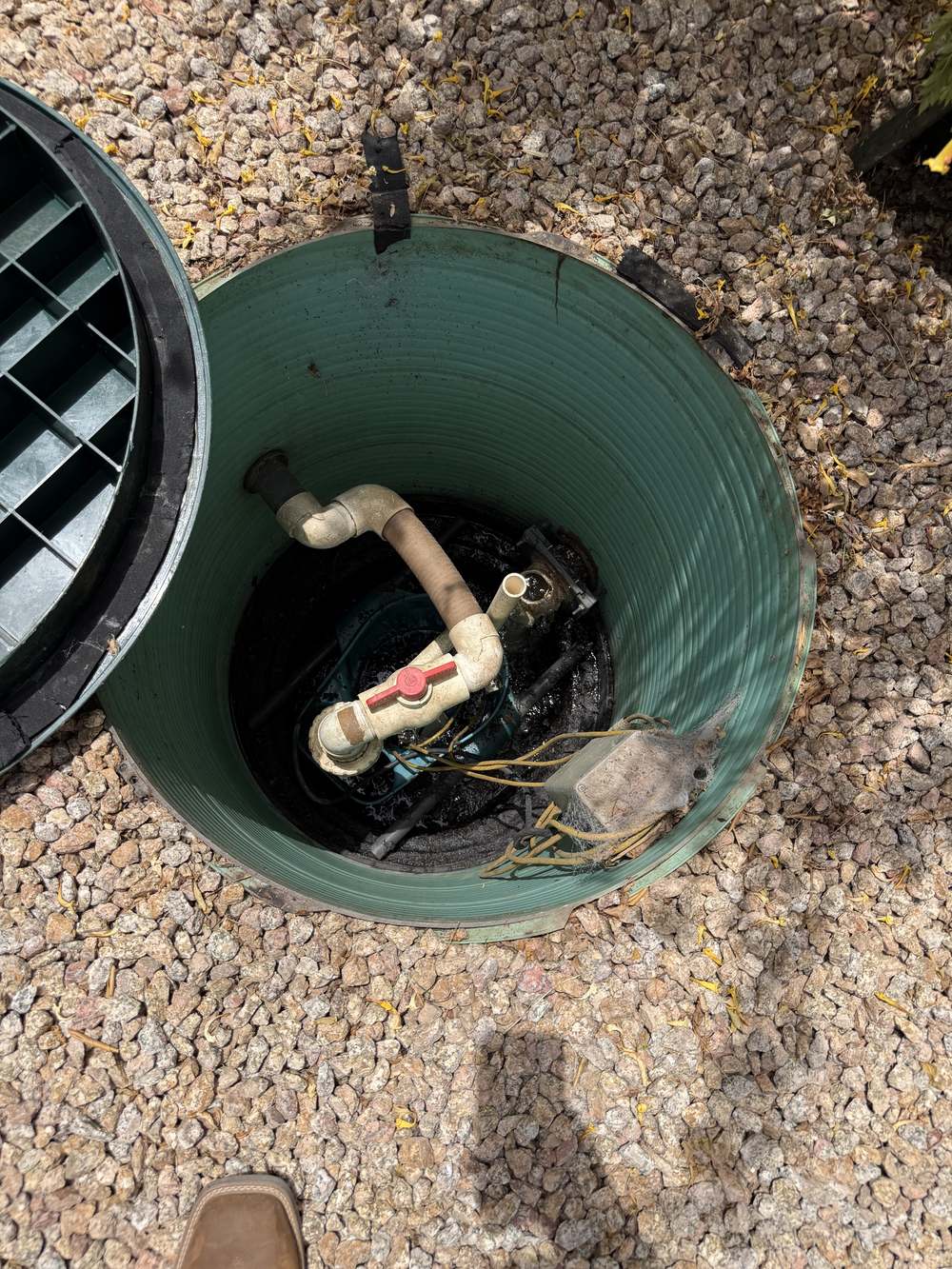
What We Service
Sewage ejector pumps, septic effluent pumps, grinder pumps, and the small private lift stations that serve casitas and multi-building lots.
Address: 2550 W Union Hills Dr, Phoenix, AZ 85027
Phone: (623) 526-8900
Also available: (602) 777-PUMP
Hours: Mon–Fri 7am–6pm | Sat 8am–4pm
License: ROC# 333406 — Licensed, Insured & Bonded
Businesses & Multifamily
Phoenix requires most food-service establishments on city sewer to run an exterior grease interceptor of at least 500 gallons, pumped at least every 90 days and before it reaches a quarter full. Car washes and vehicle shops carry their own interceptor rules, and the garden-style complexes going up along the I-17 corridor through Deer Valley and Norterra routinely run private lift stations and drainage sumps below their garages.
If that is your world, our commercial lift station service and grease trap cleaning pages cover maintenance agreements, emergency response, and pricing. This page is for the houses.
Nearby & Related
Phoenix Septic Pumping · Commercial Lift Stations · New River Pump Service · Septic & Ejector Pump Repair
Phoenix Pump FAQs
A sewage ejector pump, usually in a sealed basin below the lowest fixture, plus a check valve and a properly set float. Code also wants backwater protection on fixtures that sit below the upstream manhole rim, which protects you if the city main ever surcharges. We size the pump to the fixture load and the lift height, because an undersized pump runs constantly and dies young.
Maricopa County Environmental Services, not the city. County-island septic permits run through the county’s Onsite Wastewater program, and the process can include a sewer determination documenting whether a public sewer connection is available. We work these parcels regularly and handle the county paperwork when a repair needs a permit.
Yes. Both are unincorporated well-and-septic country north of the city, and both are core service area for us. New River has its own page covering pump systems out there, and our Cave Creek depot puts a truck closer than most Phoenix-based outfits can manage.
It is a today problem, not always a right-now problem. The alarm float trips while reserve capacity remains, so silence the horn, check the pump breaker once, and cut back to essential water use. If the light will not clear within a few hours, call (602) 777-PUMP. After-hours emergency dispatch is available when it cannot wait until morning.
Ejector pump and float repairs commonly land in the hundreds; full pump replacements run into the low thousands depending on pump type and access, and national cost guides put typical ejector replacements between roughly $850 and $3,500. Our lift station ranges are published: $300–$600 preventative visits, $1,500–$5,000 pump replacement. See the cost guide.